THE WARD FAMILY
The Ward family exists at the center of The Executor Series—a multigenerational story about inheritance, influence, memory, and responsibilities passed from one generation to the next.
What begins with the death of Thomas Ward becomes something larger: a family discovering that what they inherited cannot be measured only by what was left behind.
Each member of the Ward family carries a different piece of that inheritance.
_________________________________________________________________________________________________________________________________________________________________________________________________________________________________________
THOMAS WARD
Structural Engineer. Father. Executor.
Long before Elias Ward inherited the consequences of the system, Thomas Ward built the life that concealed it.
To the public, he was disciplined, respected, and impossibly composed. To his family, he was something more difficult to define: protective, distant, strategic, and quietly feared.
Even after death, Thomas Ward remains the gravitational center of The Executor Series.

_________________________________________________________________________________________________________________________________________________________________________________________________________________________________________
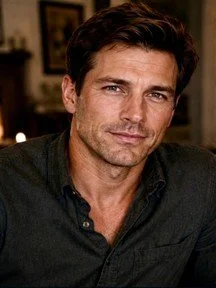
ELIAS WARD
Architect. Husband. Father. Executor.
Elias Ward inherits more than his father’s estate. He inherits the silence surrounding it.
Disciplined but deeply conflicted, Elias exists between two worlds: the life he built for his family and the hidden system threatening to consume it.
Unlike Thomas Ward, Elias questions the cost of control. But the deeper he moves into his father’s legacy, the more difficult it becomes to separate protection from power.
In The Executor Series, Elias Ward stands at the center of succession—forced to decide not whether he will inherit his father’s legacy, but what he will do with it.
_________________________________________________________________________________________________________________________________________________________________________________________________________________________________________
CLAIRE WARD
Interior Designer. Wife. Mother. Anchor.
Claire Ward understands the life Elias is trying to protect—and what protecting it actually requires.
Intelligent, emotionally perceptive, and quietly resilient, Claire sees changes in Elias long before he is willing to admit them himself. Where Thomas Ward built structures to contain control, Claire creates spaces designed for stability, warmth, and truth.
As the hidden legacy of the Ward family begins to surface, Claire becomes increasingly aware that silence itself can be inherited.
In The Executor Series, Claire Ward is not merely adjacent to the inheritance. She sees what systems often fail to account for: the people living inside them, and the human cost of every decision made in the name of protection.

_________________________________________________________________________________________________________________________________________________________________________________________________________________________________________
MARA WARD
Historian. Curator. Investigator. Witness.
Mara Ward is the first member of the Ward family to openly question the architecture surrounding her father’s legacy.
Sharp-minded, emotionally disciplined, and relentlessly observant, Mara approaches the hidden world behind The Executor Series the way she approaches history itself: by studying omissions, contradictions, and the stories powerful people refuse to preserve.
Where Elias looks for structure, Mara looks for history. She understands that systems survive not only through power, but through memory—and she refuses to mistake what is remembered for the whole truth.
As the deeper structure surrounding Thomas Ward begins to emerge, Mara becomes increasingly determined to understand not only what her father built, but why—and what responsibility his choices leave to those who inherit them.
In The Executor Series, Mara Ward is the family’s historian and investigator: the person most willing to look backward when everyone else is being pulled forward. She knows that understanding what happened may be the only way to decide what should survive.

________________________________________________________________________________________________________________________________________________________________________________________________________________________________________
MARGARET WARD
Mother. Strategist. Keeper of Silence.
Margaret Ward spent decades living beside a man whose influence extended far beyond what the family was allowed to understand.
Elegant, composed, and emotionally guarded, Margaret learned long ago that survival inside powerful systems often depends less on knowledge than restraint. She rarely speaks more than necessary, but beneath that restraint is a woman who understands far more than she admits.
To Elias and Mara, Margaret represents both comfort and uncertainty: the last remaining witness to the life Thomas Ward built before his death fractured the family’s understanding of itself.
Where Thomas Ward engineered structures of control, Margaret learned to endure life beside them. Her silence is not submission—it is judgment.
In The Executor Series, Margaret stands as the living bridge between the family’s visible history and the hidden architecture beneath it.

________________________________________________________________________________________________________________________________________________________________________________________________________________________________________
THE WARD LEGACY
The Ward family did not inherit a fortune.
They inherited a structure.
Across generations, silence became discipline. Discipline became protection. Protection became power. By the time Elias Ward begins to understand what his father left behind, inheritance has become something more complicated than possession. It has become responsibility.
At the center of The Executor Series is a single question:
What does a family owe the systems that built it?
Each member of the Ward family answers that question differently. Some preserve what was built. Some question it. Some try to understand it. And some begin to ask whether what they inherited deserves to survive.
The Executor Series is ultimately a story about legacy—not as memory, but as architecture.